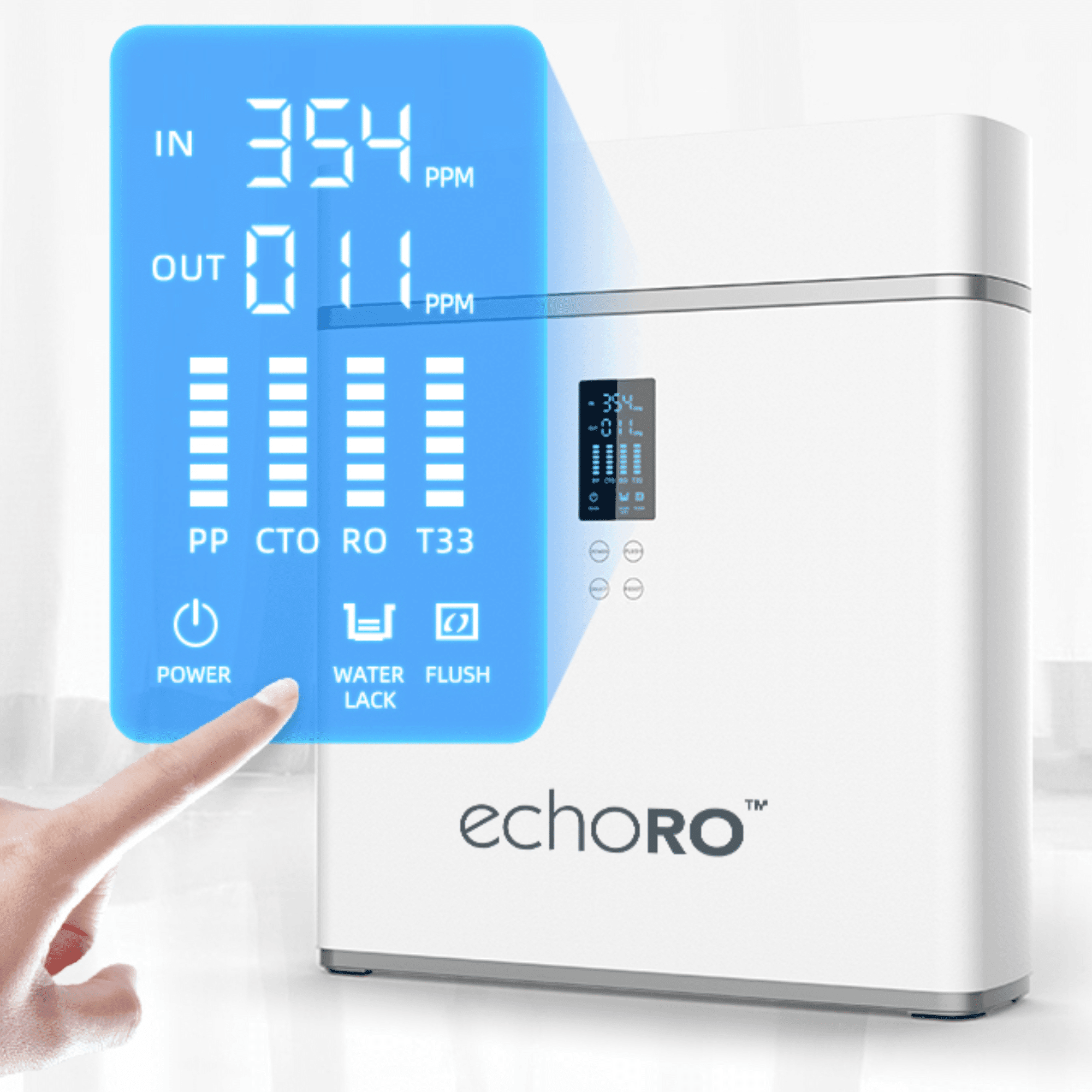
How the Echo RO™ Works:
The Echo RO™ is an at-home reverse osmosis water filtration system designed to deliver exceptionally clean and great-tasting water. What sets the Echo RO™ apart is its sophisticated four-filter system, which effectively removes a wide range of impurities to provide cleaner water than traditional filtration systems.
Four-Stage Filtration System: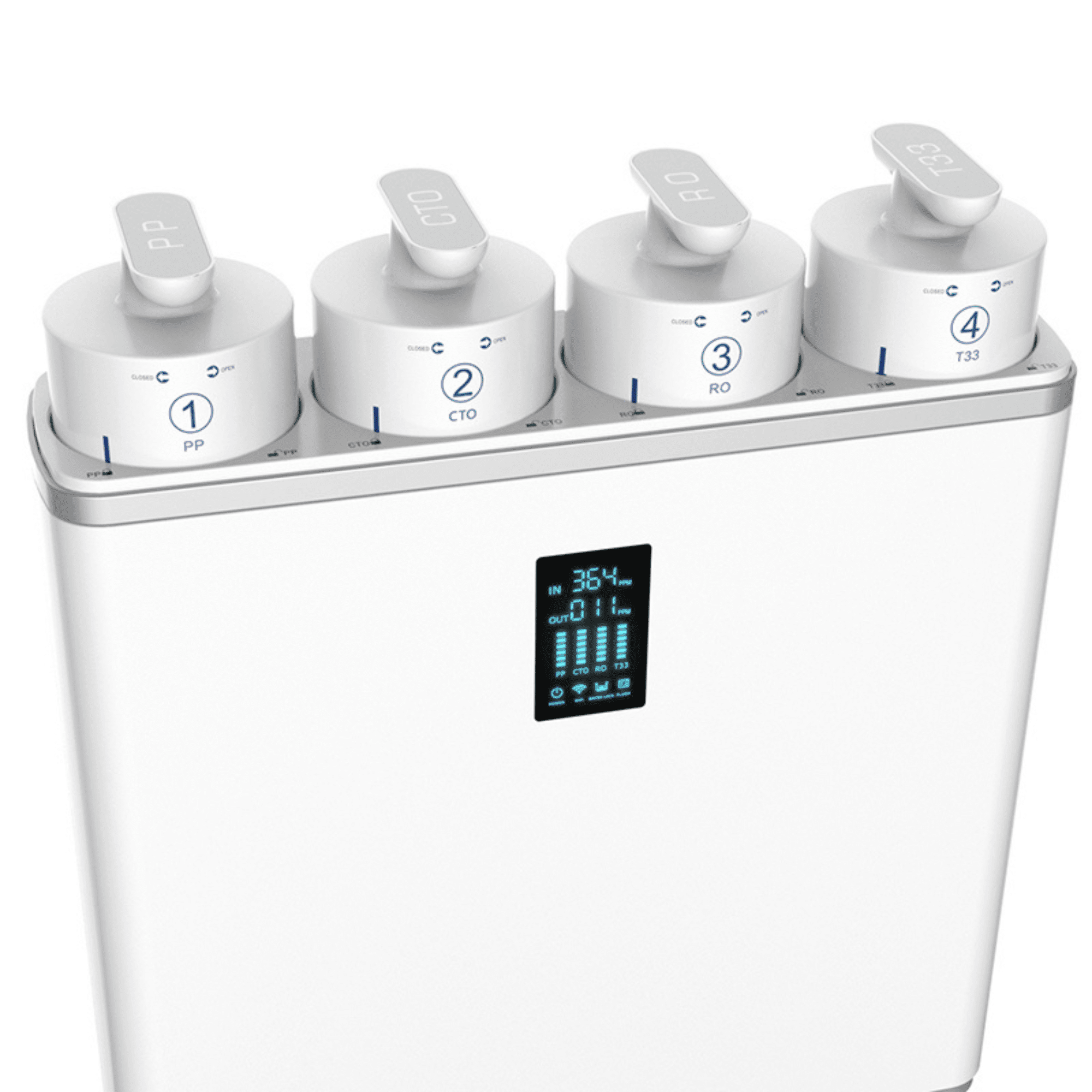
1. Spun Polypropylene (PP) Filter
The first stage captures larger particles such as rust, sand, sediment, and other suspended solids. This helps improve water clarity while protecting the filters that follow.
2. Carbon Block (CTO) Filter
The second stage uses a high-quality carbon block to reduce chlorine, unpleasant tastes and odors, and a variety of organic compounds. It also helps protect the reverse osmosis membrane by removing contaminants that can shorten its lifespan.
3. Reverse Osmosis (RO) Membrane
The heart of the Echo RO™ system is the reverse osmosis membrane. Using advanced reverse osmosis technology, it helps reduce a wide range of dissolved contaminants, including heavy metals, lead, arsenic, fluoride, nitrates and nitrites, PFAS ("forever chemicals"), dissolved salts, bacteria, viruses, and many other impurities.
The RO membrane is also the stage responsible for reducing fluoride. Its microscopic pores are small enough to block fluoride ions and many other dissolved contaminants while allowing clean water molecules to pass through. Reverse osmosis systems can typically reduce up to 90% of fluoride from drinking water, depending on water quality and operating conditions.
Note: While the RO membrane can physically remove bacteria and viruses, it should not be relied upon as a substitute for disinfection if the source water is microbiologically unsafe.
4. Post Activated Carbon (T-33) Filter
The final stage polishes your water by reducing any remaining tastes or odors, delivering fresh, crisp, great-tasting water with every glass.
Key Benefits:
- Cleaner, safer water: Removes harmful contaminants such as bacteria, heavy metals, and dissolved solids.
- Improved taste and odor: Activated carbon filters eliminate chlorine and unpleasant odors, giving you fresh-tasting water every time.
- Reduced impurities: The system effectively removes rust, organic matter, and suspended solids, ensuring clearer water.
Why You Need a Four-Filter System:
The Echo RO™’s four-stage filtration system provides superior water quality compared to standard systems. Each filter targets different impurities, so you can be confident that your drinking water is free from contaminants like chlorine, bacteria, heavy metals, and dissolved solids.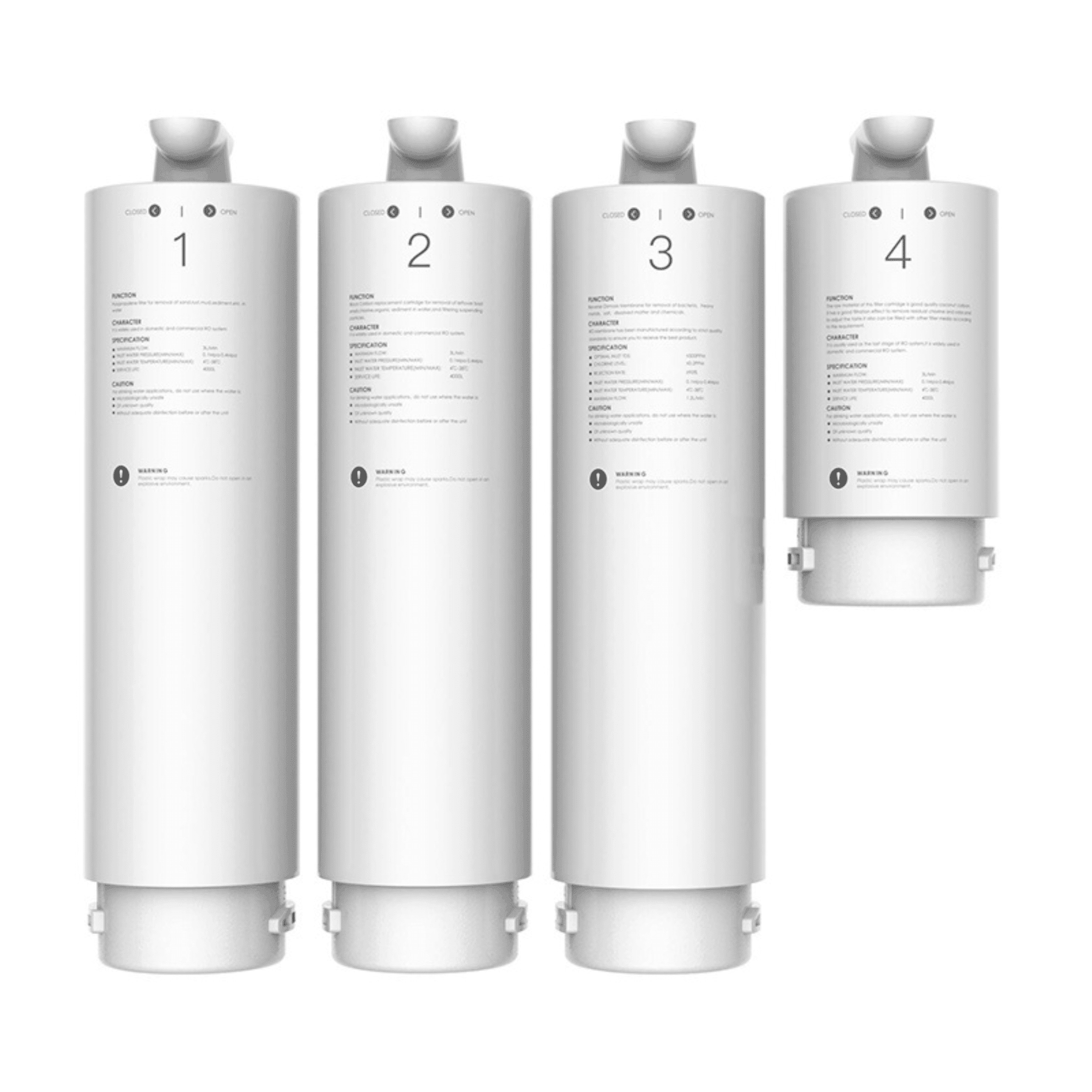
With the Echo RO™, you can enjoy peace of mind knowing that you and your family are drinking clean, great-tasting water that’s safe and healthy. Perfect for any home water filtration needs, the Echo RO™ ensures every glass is pure and refreshing.
Filter cartridge replacement
Filter Cartridge | Lifespan |
| Spun PP Filter | 3-6 months |
| Carbon Block Filter | 3-6 months |
| RO Membrane | 12-24 months |
| Post Activated Carbon Filter | 3-6 months |
Important: Filter lifespan is influenced by water quality and daily consumption, so replacement intervals may vary. Replace as appropriate based on filter life indicator
❔Does an RO get rid of beneficial minerals in your water?
✅ Benefits of RO Water:
Removes Contaminants: RO filters out many harmful substances like: Lead, Arsenic, PFAS, Nitrates, Pesticides, Bacteria and viruses (if combined with UV or other post-filters)
Tastes Cleaner: Many people prefer the taste because it removes chlorine and sediment.
⚠️ What About the Minerals It Removes?
Yes, RO systems also remove beneficial minerals like Calcium, Magnesium and Potassium. These minerals are essential to health, but Most of your mineral intake comes from food, not water. For example, even mineral-rich spring water provides only a small fraction of your daily calcium or magnesium
❔Do nanoparticles get into the water from the filters in the RO?
To remove nanoparticles the filter must be smaller then 1nano meter. Our RO unit's filters out to .1 nano meters
❔Does the RO filter out microplastics?
The filter in the Ultimate and Echo H2 ranges between .1 and .01 microns, and the Echo RO is .0001 microns. These are both smaller than microplastics.
Large Microplastics (1 mm to 5 mm): These can be filtered with mesh screens or filters with a pore size of around 1 millimeter or less. Due to their larger size, they are easier to capture.
Small Microplastics (10 microns to 1 mm): Filters with pore sizes around 0.1 to 1 millimeter are generally effective in capturing these smaller particles.
Microbeads and Nano plastics (< 10 microns): These are the smallest categories of microplastics and require more specialized filtration techniques. Filters for these sizes typically need pore sizes of less than 10 microns, often down to 1 micron or even smaller to ensure effective capture.
❔Does the Echo RO system put any essential minerals back into the water after it filtrates it?
The Echo RO unit just Filters out the water. It does NOT add minerals into the water. If you are wanting to do this, you would need to add a remineralizer after the RO unit
❔How do I store my filters for the RO system if not being used for extended period of time?
If you are not going to be using your RO for an extended amount of time (few months or more) the best way to store your filters is in the refrigerator. This will help reduce any possibilities of bacteria or mold growing. Make sure to give it a good couple of flushes before you take them out.
Related to:
Add comment
Please sign in to leave a comment.