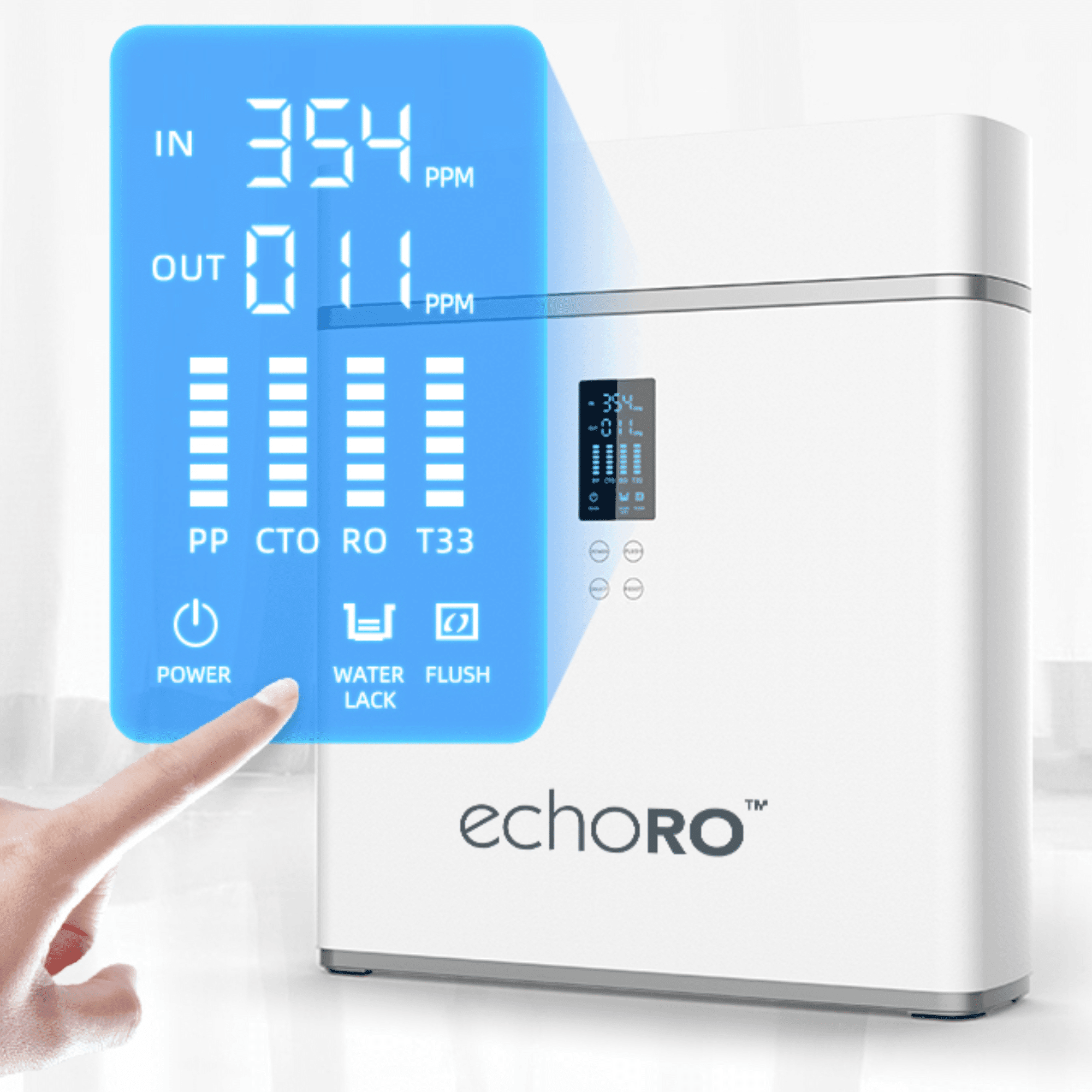
The Echo RO™ is a tankless reverse osmosis filtration system that provides filtered water for drinking and cooking. Its four stages work together to reduce sediment, chlorine, unwanted tastes and odors, and a range of dissolved contaminants—including fluoride and PFAS.
Here’s what each filter does and how to keep your system working well.
How the four-stage filtration system works
Each filter has a different job. The first two prepare the water and protect the RO membrane; the membrane reduces dissolved contaminants, and the final filter improves taste before the water reaches your glass.
| Stage | Filter | What it does |
|---|---|---|
| 1 | Spun Polypropylene (PP) | Captures sand, rust, sediment, and other suspended particles. Helps protect the remaining filters from buildup. |
| 2 | Carbon Block (CTO) | Reduces chlorine, unwanted tastes and odors, and certain organic compounds. Helps protect the RO membrane from chlorine damage. |
| 3 | Reverse Osmosis (RO) Membrane | Separates water from many dissolved substances, including fluoride, dissolved salts, and certain metals and other contaminants. |
| 4 | Post Activated Carbon (T-33) | Provides a final taste-and-odor polish before dispensing. |
During reverse osmosis, pressure pushes water through a semipermeable membrane. Filtered water moves toward the faucet, while rejected substances leave through the drain line.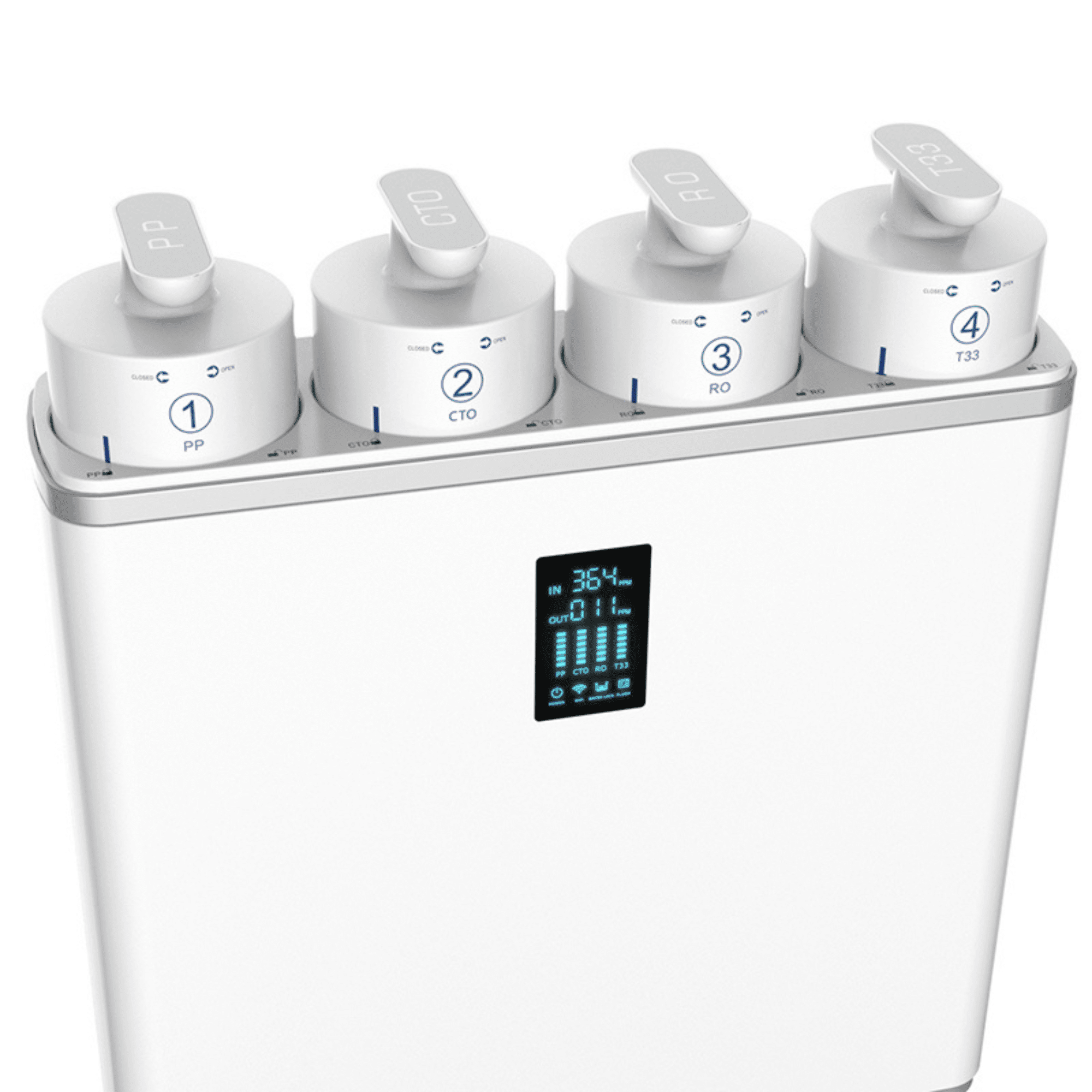
What does the Echo RO help reduce?
Echo’s filtration information identifies the following substances as targets of the system’s filtration process:
| Substance | Primary filtration stage |
|---|---|
| Sand, rust, and sediment | Spun PP filter |
| Chlorine and associated tastes and odors | Carbon filters |
| Certain organic compounds | Carbon block filter |
| Fluoride | RO membrane |
| PFAS, often called “forever chemicals” | RO membrane |
| Lead, arsenic, and certain other metals | RO membrane |
| Nitrates, nitrites, and dissolved salts | RO membrane |
The amount reduced varies by substance, incoming water quality, operating conditions, and filter condition. This list does not mean every substance is completely removed or reduced by the same percentage.
Key Benefits:
- Cleaner, safer water: Removes harmful contaminants such as bacteria, heavy metals, and dissolved solids.
- Improved taste and odor: Activated carbon filters eliminate chlorine and unpleasant odors, giving you fresh-tasting water every time.
- Reduced impurities: The system effectively removes rust, organic matter, and suspended solids, ensuring clearer water.
Why You Need a Four-Filter System:
The Echo RO™’s four-stage filtration system provides superior water quality compared to standard systems. Each filter targets different impurities, so you can be confident that your drinking water is free from contaminants like chlorine, bacteria, heavy metals, and dissolved solids.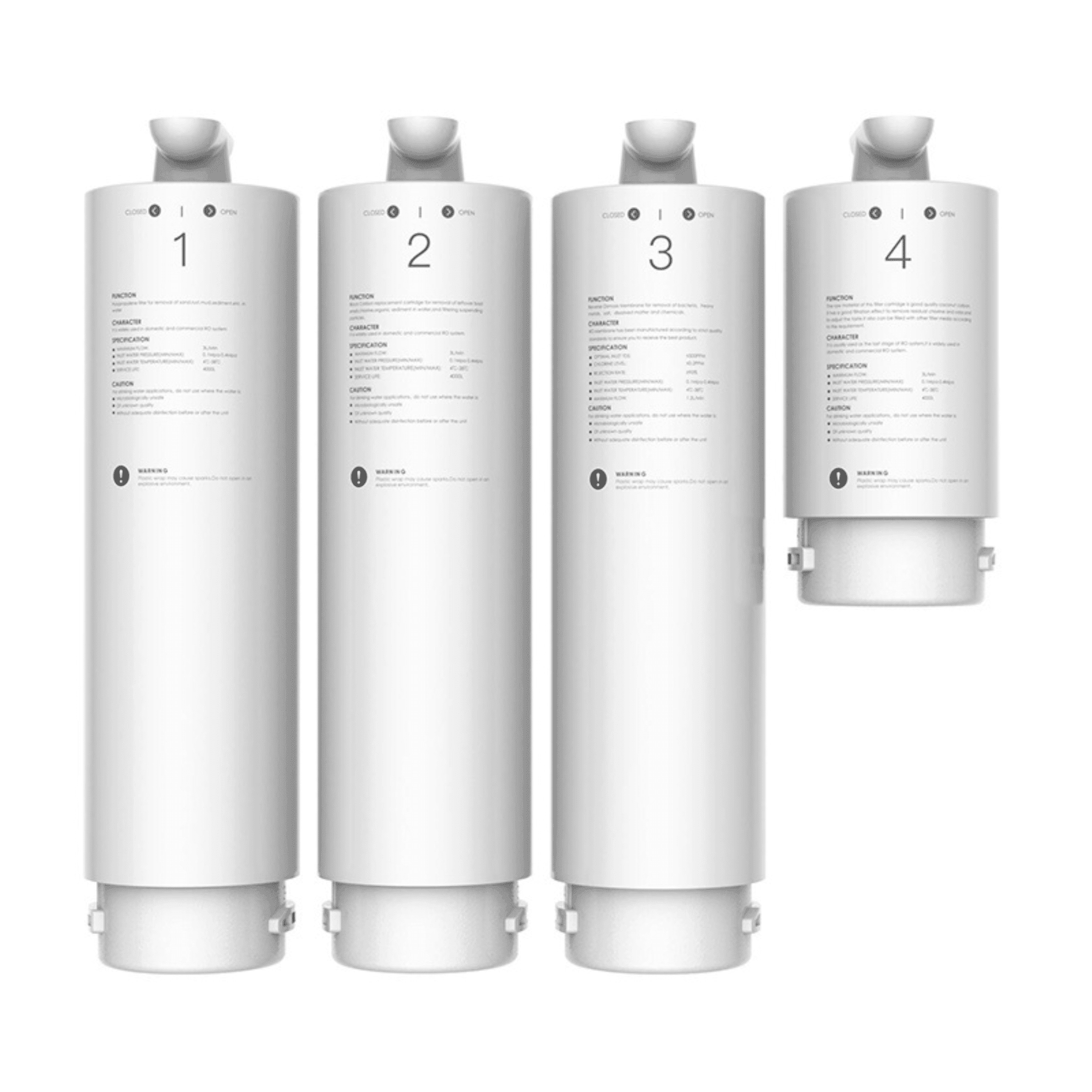
With the Echo RO™, you can enjoy peace of mind knowing that you and your family are drinking clean, great-tasting water that’s safe and healthy. Perfect for any home water filtration needs, the Echo RO™ ensures every glass is pure and refreshing.
Does it reduce PFAS?
The Echo RO is designed to help reduce PFAS through its RO membrane. The EPA recognizes reverse osmosis as a treatment option for reducing PFAS.
PFAS includes many different chemicals, so a general PFAS claim does not establish equal reduction of every type. If PFAS is your main concern, ask Echo Support for current performance documentation covering the specific chemicals identified in your water test.
How fine is the RO membrane?
Echo lists its RO membrane’s filtration rating as 0.0001 micron, equivalent to 0.1 nanometer.
That rating describes extremely fine separation. It does not, by itself, establish a removal percentage for every chemical or particle. Substance-specific testing provides that information.
Common filtration questions
Does the Echo RO filter out microplastics?
Based on its listed membrane rating, the Echo RO would be expected to capture microplastic particles larger than the membrane’s separation scale. However, a size comparison alone does not establish a tested removal percentage for this machine.
Microplastics and nanoplastics cover different particle sizes. Claims about complete removal of either require specific performance testing.
Can nanoparticles come from the filters?
Removing particles already in source water and determining whether a filter releases particles are two separate questions. The membrane rating alone cannot confirm that no nanoparticles enter the finished water from any system component.
Follow Echo’s flushing instructions after installation and filter replacement. Contact Echo Support if you notice persistent particles in your filtered water.
Does reverse osmosis remove beneficial minerals?
Yes. RO can reduce dissolved minerals such as calcium, magnesium, and potassium along with unwanted substances. The Echo RO does not add those minerals back into the water.
If you prefer remineralized water, ask Echo Support about a compatible remineralization option before adding equipment to your setup.
Does it remove bacteria and viruses?
Reverse osmosis can physically remove bacteria and viruses. However, the Echo RO should not be treated as a substitute for disinfection when source water is microbiologically unsafe or of unknown quality.
Use appropriate disinfection and follow local drinking-water advisories when applicable.
When should I replace the filters?
The following intervals match the Echo RO support manual:
| Filter cartridge | Typical replacement interval |
|---|---|
| Spun PP filter | Every 3–6 months |
| Carbon block filter | Every 3–6 months |
| RO membrane | Every 12–24 months |
| Post activated carbon filter | Every 3–6 months |
These are guidelines rather than guaranteed lifespans. Incoming water quality and daily use affect how quickly filters need replacement. Monitor the filter-life indicator and contact support if performance changes before a filter is due.
For replacement, flushing, and indicator-reset instructions, follow the Echo RO User Manual.
What if I won’t use the system for several months?
Echo’s current filter guidance recommends refrigerating used filters during extended storage. Do not freeze them. Refrigeration does not disinfect a used filter or guarantee that it will remain suitable for reuse.
Before an extended shutdown, contact Echo Support for storage and restart instructions specific to your filters and time away, including any flushing, sanitizing, or replacement needed before drinking the water again.
Need help with your water conditions or filter maintenance? Contact Echo Water Support, and we’ll help you find the next step.
Related to:
Add comment
Please sign in to leave a comment.